

TLDR
Ben Thanh Market is the most famous market in Ho Chi Minh City, operating since the early 1900s. The indoor market (6 AM to 6 PM) sells everything from dried fruit and coffee to clothes, lacquerware, and souvenirs. Prices are inflated for tourists so you need to bargain. Start at 40-50% of the asking price. The night market (6 PM to midnight) wraps around the outside and has better street food at lower prices. The market is a 10-minute walk from Beauty House. Go early morning or late afternoon to avoid the worst heat. Watch your belongings in crowded aisles.
Insider Tip
The food stalls at the back of the indoor market (the wet market section) serve the best food at the best prices. Most tourists never make it past the souvenir stalls at the front. Walk straight through to the back and look for the stalls with the most Vietnamese customers sitting at them. A bowl of pho or a plate of com tam costs 40,000-50,000 VND compared to 70,000-80,000 VND at the tourist-facing stalls near the entrance.
10 minutes on foot from the market. Beauty House on Nguyen Hue — walk to Ben Thanh along the pedestrian boulevard.
A Brief History of Ben Thanh Market

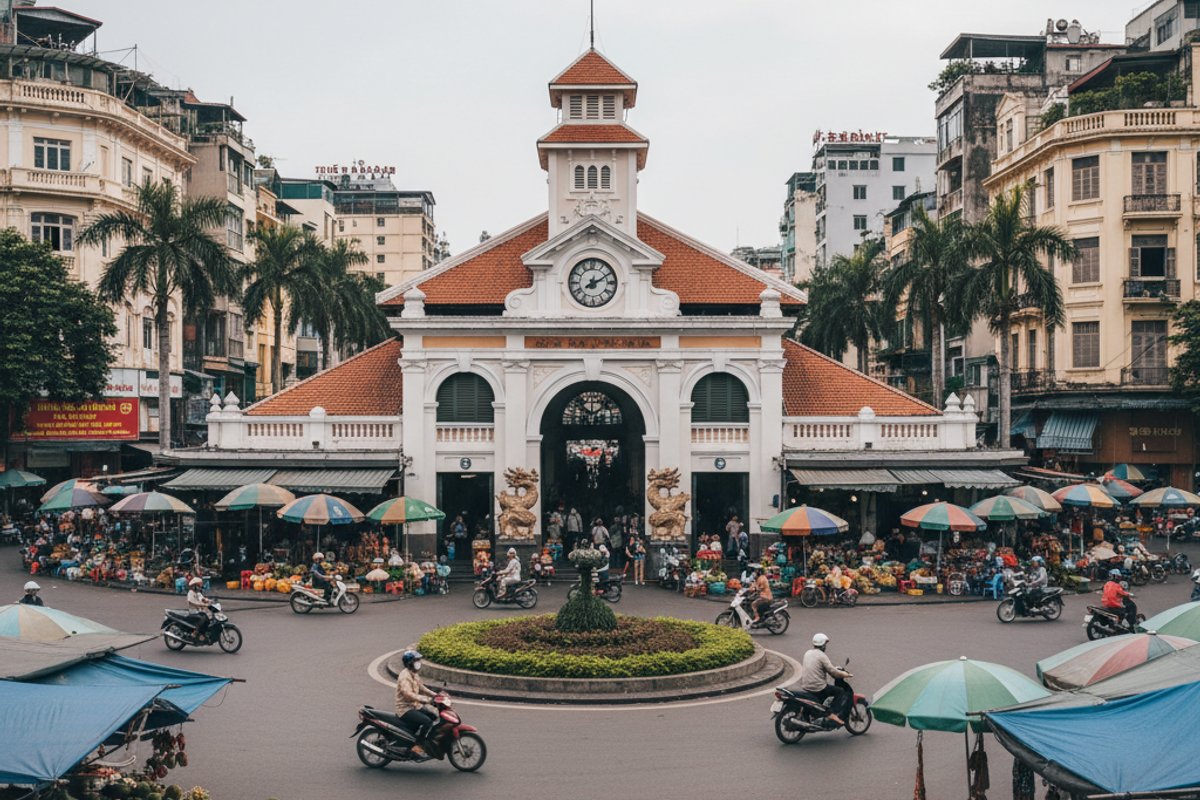
The original Ben Thanh Market dates back to the early 1800s when it was a collection of stalls near the Saigon River. The current building was constructed in 1912 by the French colonial government and has been in continuous operation since then. The clock tower at the main entrance on Le Loi Street is one of the most recognized symbols of Ho Chi Minh City.
The market has survived wars, regime changes, and economic shifts. It now sits at a major intersection where several of District 1’s main streets converge. The Ben Thanh Metro Station (Metro Line 1) is directly adjacent, making the market one of the most accessible landmarks in the city.
What You Will Find Inside
The indoor market is organized roughly by product type, though the boundaries blur. Here is a general layout:
Front entrance (Le Loi side): Souvenir shops, t-shirts, magnets, postcards, lacquerware, and gift items. This is the most tourist-oriented section and the most aggressively priced. Everything here costs more than it should and requires negotiation.
Central aisles: Clothing, fabrics, and tailoring. Ao dai (traditional Vietnamese dress) in various styles and fabrics. Silk scarves, linen shirts, and knock-off designer goods. Quality varies widely. Feel the fabric before buying and check stitching carefully.
Side sections: Dried fruit (jackfruit chips, mango, banana), cashew nuts, Vietnamese coffee beans (look for Trung Nguyen brand or ask for robusta whole beans), spices, and packaged snacks. These make excellent gifts and are lighter than lacquerware.
Back section (wet market): Fresh meat, fish, vegetables, and prepared food stalls. This is where locals actually shop. The food stalls here serve pho, com tam, bun, banh mi, and fresh fruit smoothies at prices closer to what Vietnamese people pay. This section closes earlier in the afternoon as fresh produce runs out.
How to Bargain

Bargaining is expected and the vendors enjoy it. There is no rudeness in negotiating. The initial asking price at Ben Thanh is typically 2-3 times what the vendor will actually accept. Here is a practical approach:
Step 1: Ask the price. The vendor will give you the tourist price, often by typing a number on a calculator or writing it on paper.
Step 2: Counter at 40-50% of their asking price. This is not insulting. It is expected. If they ask 200,000 VND, you say 80,000-100,000 VND.
Step 3: Work toward a middle ground. They will come down, you come up slightly. If you reach an impasse, start walking away. If they call you back with a lower price, you are close to the real price. If they let you go, you were too low.
Step 4: Smile throughout. Bargaining here is a social interaction, not a confrontation. A friendly negotiation usually gets better results than a hard-nosed approach.
A few things that are not worth bargaining over: food stalls have fixed prices (what you see is what you pay), and anything under 20,000 VND is too small to negotiate.
For context on prices across the city, check our budget guide.
What to Buy (and What to Skip)
Worth buying: Vietnamese coffee beans (whole or ground, 100,000-200,000 VND per 500g), dried fruit (jackfruit chips are the standout, 50,000-80,000 VND per bag), cashew nuts (cheaper than anywhere in the West), silk scarves (after bargaining, 80,000-150,000 VND), and small lacquerware items like chopstick sets or coasters (50,000-100,000 VND after bargaining).
Skip: Knock-off designer goods (poor quality), electronics (no warranty, questionable authenticity), and anything the vendor pressures you to buy quickly. If someone seems desperate to close a sale, walk away.
Compare first: Walk the full market before buying anything. The same products appear at multiple stalls, and knowing the range of asking prices gives you better bargaining leverage.
“Went here on a tuesday afternoon and they had plenty of space. I was accommodated right away by their friendly staff. They even gave complementary water and a free cushion coaster to take home. Service-wise, definitely bang for the buck! I came out relaxed from the massage and head spa. My usually frizzy hair felt so soft and clean.”
The Night Market
When the indoor market closes at 6 PM, the night market opens around the outside of the building. Stalls set up along the sidewalks selling street food, clothing, accessories, and souvenirs. The atmosphere shifts from daytime commerce to evening socializing.
The food at the night market is the main draw. Stalls serve banh mi (from 15,000 VND / $0.60 USD), pho, spring rolls, grilled seafood on skewers, banh xeo (Vietnamese crepes), and fresh fruit smoothies. Prices are lower than the indoor food stalls and the quality is at least as good.
The night market runs until about midnight. It gets busiest between 7-9 PM. Come hungry and eat your way through multiple stalls. A full dinner of sampling different street foods costs 50,000-100,000 VND (about $2-4 USD).
One note: the night market vendors are less aggressive about bargaining than the indoor vendors. Prices are lower to begin with and negotiation is more relaxed. You can still negotiate on clothing and souvenirs but the food prices are fixed.
Safety and Practical Tips
Pickpocketing: Ben Thanh Market is one of the higher-risk areas in Ho Chi Minh City for pickpocketing. Keep your wallet in your front pocket and your bag closed and in front of you. Do not put your phone in your back pocket. Leave your passport at the hotel.
Heat: The indoor market has no air conditioning and gets extremely hot during midday. Morning (before 9 AM) and late afternoon (after 4 PM) are much more comfortable. Bring water.
Cash: Most vendors accept only cash (Vietnamese Dong). Some larger stalls accept cards but the card machines do not always work. Bring enough cash for what you plan to buy. ATMs are available at the nearby Vincom Center and along Le Loi Street.
Bathrooms: There are public toilets inside the market. They cost 3,000-5,000 VND. Bring your own tissues as they are not always provided.
Alternatives to Ben Thanh Market
If Ben Thanh feels too touristy, several other markets in the city offer a more local experience.
Binh Tay Market (Cho Lon/District 5): The wholesale market in Chinatown. Bigger, busier, and cheaper than Ben Thanh. Better for bulk purchases and Chinese-Vietnamese food. Less English spoken but more authentic. See our neighborhood guide for details on Cho Lon.
Tan Dinh Market (District 1/3 border): Known for fabrics and tailoring. Less touristy than Ben Thanh with better fabric prices. The surrounding streets have some of the best banh mi in the city.
Dan Sinh Market (District 1): Military surplus and camping gear market. Old US military jackets, dog tags, water canteens, and camping equipment. Some items are genuine surplus, some are reproductions. An interesting browse even if you do not buy anything.
The Lonely Planet Ben Thanh Market guide has additional vendor recommendations and seasonal event information.
For the best food in the city beyond the market, see our restaurant guide.
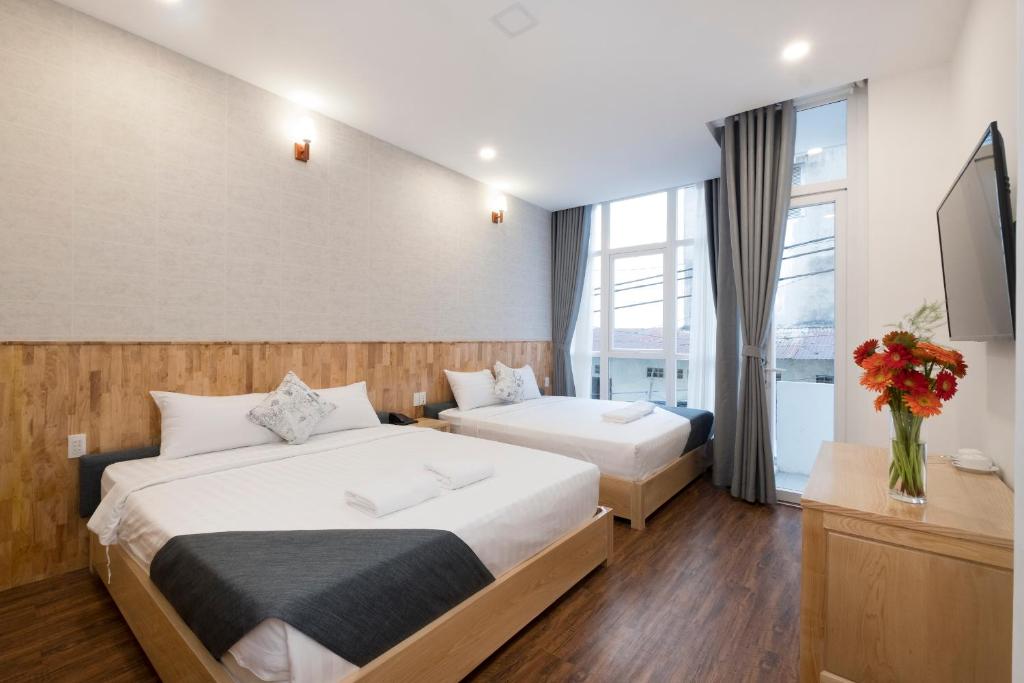
See Beauty House for Yourself


Browse All Photos on Booking.com →
This post contains affiliate links. We may earn a commission at no extra cost to you.
Walk to Ben Thanh Market
Beauty House is a 10-minute walk from Ben Thanh along Nguyen Hue Walking Street. Drop your shopping bags off at the hotel and head back for the night market.
Check Available RoomsWe may earn a small commission if you book through this link. It doesn’t cost you anything extra.
Frequently Asked Questions
What are the Ben Thanh Market opening hours?
The indoor market is open from 6:00 AM to 6:00 PM daily. The night market around the outside of the building runs from about 6:00 PM to midnight. The market operates every day of the year including holidays.
Do I need to bargain at Ben Thanh Market?
Yes, for non-food items. The initial asking price is typically 2-3 times what the vendor will accept. Start at 40-50% of the asking price and work toward a middle ground. Food stalls have fixed prices that are not negotiable. Smile and keep it friendly.
Is Ben Thanh Market safe?
Generally yes, but pickpocketing happens in the crowded aisles. Keep your wallet in your front pocket, carry your bag in front of you, and leave your passport at the hotel. Do not put valuables in your back pockets. Be aware of your surroundings, especially in the most crowded sections.
What should I buy at Ben Thanh Market?
Vietnamese coffee beans, dried jackfruit chips, cashew nuts, silk scarves, and small lacquerware items are the best value purchases. Avoid knock-off designer goods and electronics. Walk the full market and compare prices before buying anything.
Is the Ben Thanh night market worth visiting?
Yes, especially for food. The night market has better street food at lower prices than the indoor market. Banh mi from 15,000 VND, pho, spring rolls, and grilled seafood. The atmosphere is more relaxed than daytime. It runs from 6 PM to midnight, busiest between 7-9 PM.
How do I get to Ben Thanh Market?
The market is in central District 1 at the intersection of Le Loi and several major streets. It is a 10-minute walk from Nguyen Hue Walking Street. The Ben Thanh Metro Station (Metro Line 1) is directly adjacent. Grab rides from anywhere in District 1 cost under 20,000 VND.
Is there an ATM near Ben Thanh Market?
Yes. ATMs are available at the nearby Vincom Center, along Le Loi Street, and at banks on Ham Nghi Street. Most accept international cards and dispense Vietnamese Dong. Withdraw cash before entering the market as most vendors are cash only.
Are there better markets than Ben Thanh in Ho Chi Minh City?
Binh Tay Market in Cho Lon (District 5) is bigger, cheaper, and more local. Tan Dinh Market on the District 1/3 border is better for fabrics. Dan Sinh Market has military surplus. Ben Thanh is the most convenient and has the widest variety, but it is also the most tourist-oriented and most expensive.